
Use your own platelets to support healthier hair growth
A regenerative scalp treatment using your own platelet-rich plasma to support active hair follicles and improve the appearance of thinning hair.
A clinician-led approach to hair loss
Hair thinning can have several causes, so effective treatment begins with understanding why it is happening.
Every PRP hair treatment at Harley Private Medical begins with a consultation with Dr Isran Sajid. He will assess your scalp, pattern of hair loss, medical history and wider health before deciding whether PRP is appropriate.
PRP stands for platelet-rich plasma. It is prepared from a small sample of your own blood and carefully injected into areas of the scalp affected by thinning.
The aim is to support existing, active hair follicles—not to artificially implant hair or recreate follicles that are no longer functioning.
Regenerative support for thinning hair
PRP contains concentrated platelets and naturally occurring growth factors involved in the body’s healing and tissue-repair processes.
When carefully placed into the scalp, PRP may help:
✔ Support weakened or miniaturising follicles
✔ Improve the appearance of thinning hair
✔ Support hair density in suitable patients
✔ Reduce excessive shedding in some cases
✔ Encourage stronger-looking hair growth
✔ Treat early male or female pattern hair loss
✔ Complement a wider hair-loss treatment plan
Results vary between patients. PRP cannot restore hair where follicles are no longer active and is generally better suited to early or moderate thinning than advanced hair loss.
What makes PRP different?
PRP uses components taken from your own blood and concentrates them within the areas of the scalp where support is needed.
Uses your own blood
Your PRP is prepared from a small blood sample collected during the appointment.
Supports active follicles
Treatment is intended to support follicles that are still present but may be producing progressively finer hair.
Clinician-led assessment
Your pattern of hair loss, scalp and medical history are assessed before treatment is recommended.
Personalised placement
PRP is placed according to the location and pattern of your individual hair thinning.
Minimal downtime
Temporary scalp tenderness, redness, swelling or pinpoint bruising may occur.
Progressive results
Any improvement develops gradually across a planned treatment course and varies between patients.
What our patients say
Reflections from people who have visited our clinic and shared their experience.
Enhance your results with Photobiomodulation
For patients seeking a more comprehensive approach to hair restoration, PRP Hair Treatment can be combined with Eufoton Photobiomodulation (PBM).
Photobiomodulation uses controlled red and near-infrared light energy to stimulate cellular activity within the scalp. The treatment supports the natural processes involved in tissue repair, circulation and healthy hair growth without damaging the skin.
It complements the regenerative action of PRP: PRP uses your own concentrated platelets and growth factors, while photobiomodulation provides a non-invasive light-based stimulus to the scalp.
There are no additional injections and no additional invasive treatment. PBM can be added easily to your PRP appointment for patients wanting a more comprehensive hair-restoration protocol.
Our PRP pricing
PRP Hair Restoration
Supports healthier hair growth and helps improve the appearance of thinning hair.
£249
PRP Hair Restoration (Course of 5 sessions)
For optimal results, a course of 5 PRP sessions is recommended to maximise treatment response.
£1,195
Photobiomodulation (Eufoton®)
Targeted red light therapy designed to support scalp health, cellular activity and the response to PRP hair restoration.
additional £100
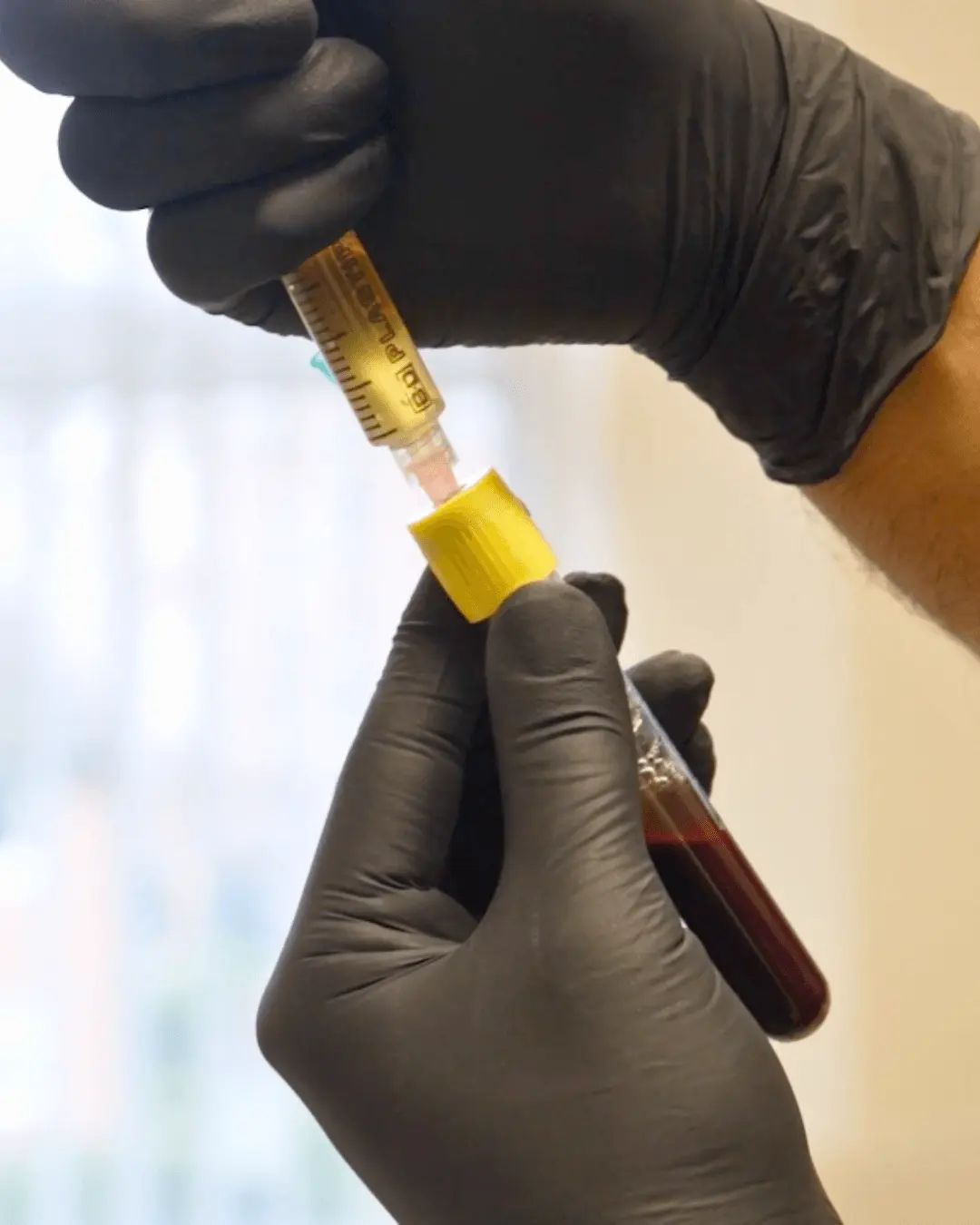
The treatment process
PRP is collected, prepared and placed into the scalp during the same appointment.
1. Medical assessment and treatment planning

Dr Isran will assess your scalp, hair-loss pattern and medical history. He will explain what PRP may realistically achieve and confirm whether treatment is appropriate.
2. Blood collection
A small sample of blood is taken in a similar way to a routine blood test.
3. PRP preparation
The blood is processed in a specialist centrifuge to separate and concentrate the platelet-rich plasma.
4. Precise scalp injections
The PRP is carefully placed into the areas affected by thinning using a series of small injections.
5. Photobiomodulation
Eufoton® photobiomodulation is used to complement your PRP treatment and support the scalp’s recovery environment.
6. Progressive response
Hair growth occurs in cycles, so any changes develop gradually. Progress is reviewed over the following months rather than immediately after treatment.
A planned course of treatment
PRP for hair is not usually considered a single-session treatment. A course of approximately three initial appointments is commonly recommended, with the sessions spaced several weeks apart.
This allows the treatment to support the scalp and active follicles across different stages of the hair-growth cycle.
Maintenance appointments may be recommended depending on your pattern of hair loss, response and wider treatment plan.

Initial hair-loss and scalp assessment
Personalised treatment planning
Professionally prepared platelet-rich plasma
Precise placement across areas of thinning
Optional Eufoton® photobiomodulation with each treatment
Professional aftercare guidance
Review of progress and future hair needs
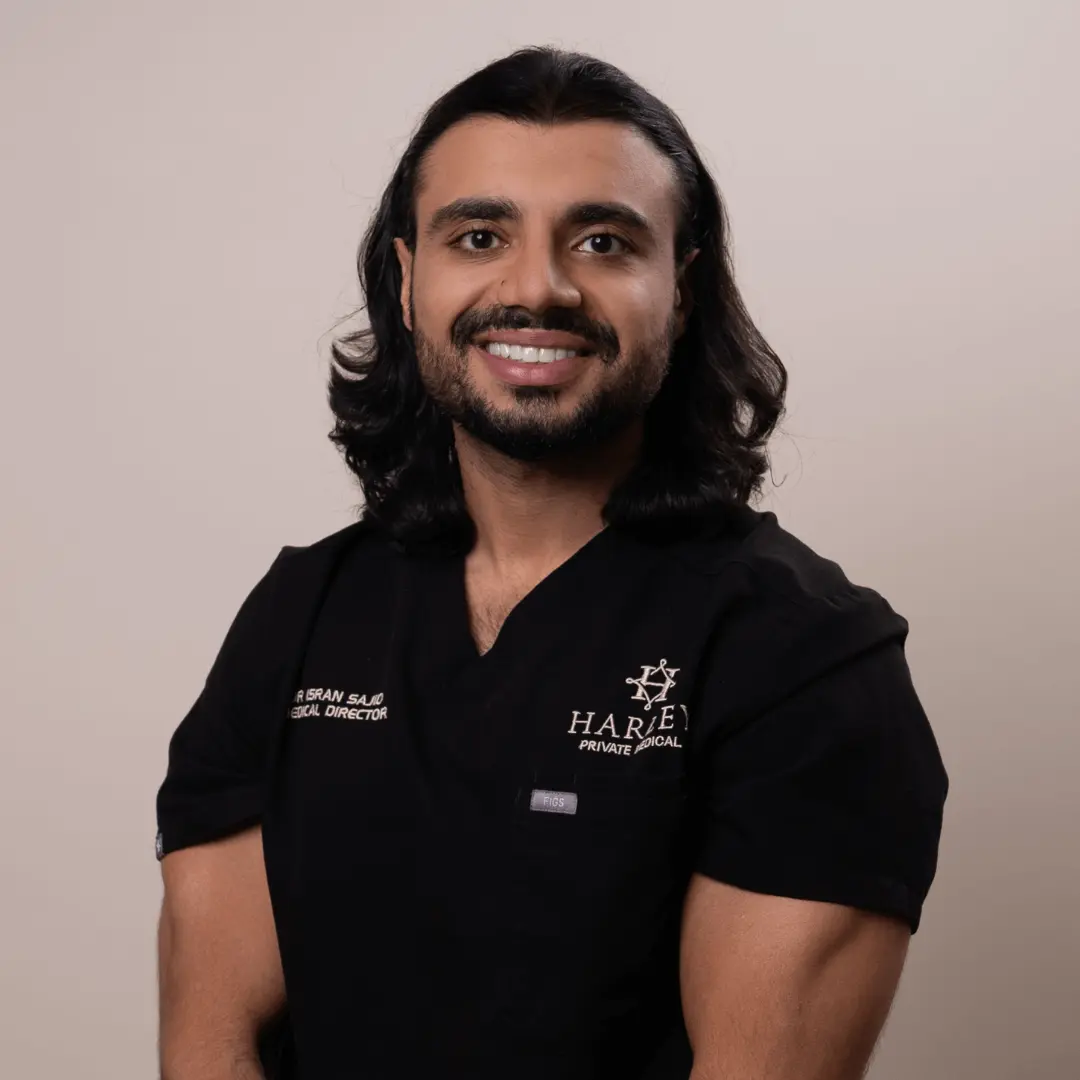
Dr Isran Sajid
GMC: 7561260
MBBS (Distinction), MRCGP (‘22)
Dr Isran Sajid is a GMC-registered medical doctor with a particular interest in regenerative medicine, hair restoration and evidence-based treatment planning.
Hair loss can have many different causes, which is why every PRP Hair journey begins with a medical assessment. Dr Isran will consider your pattern of hair loss, medical history, scalp health and individual goals before recommending treatment.
PRP may be used as a standalone treatment or as part of a wider hair restoration plan, including for patients experiencing thinning hair or looking to support and maintain the results of a hair transplant.
Where appropriate, PRP can also be combined with Eufoton Photobiomodulation (PBM) to provide an additional non-invasive, light-based approach to supporting the scalp and hair follicles.
If PRP is unlikely to be the most appropriate treatment for your type of hair loss, Dr Isran will explain why and discuss suitable alternatives or further investigation.
✔ GMC-registered medical doctor
✔ Medical assessment of hair loss
✔ Doctor-led PRP treatment
✔ Post-hair transplant support
✔ Personalised treatment programmes
✔ PRP + Photobiomodulation available
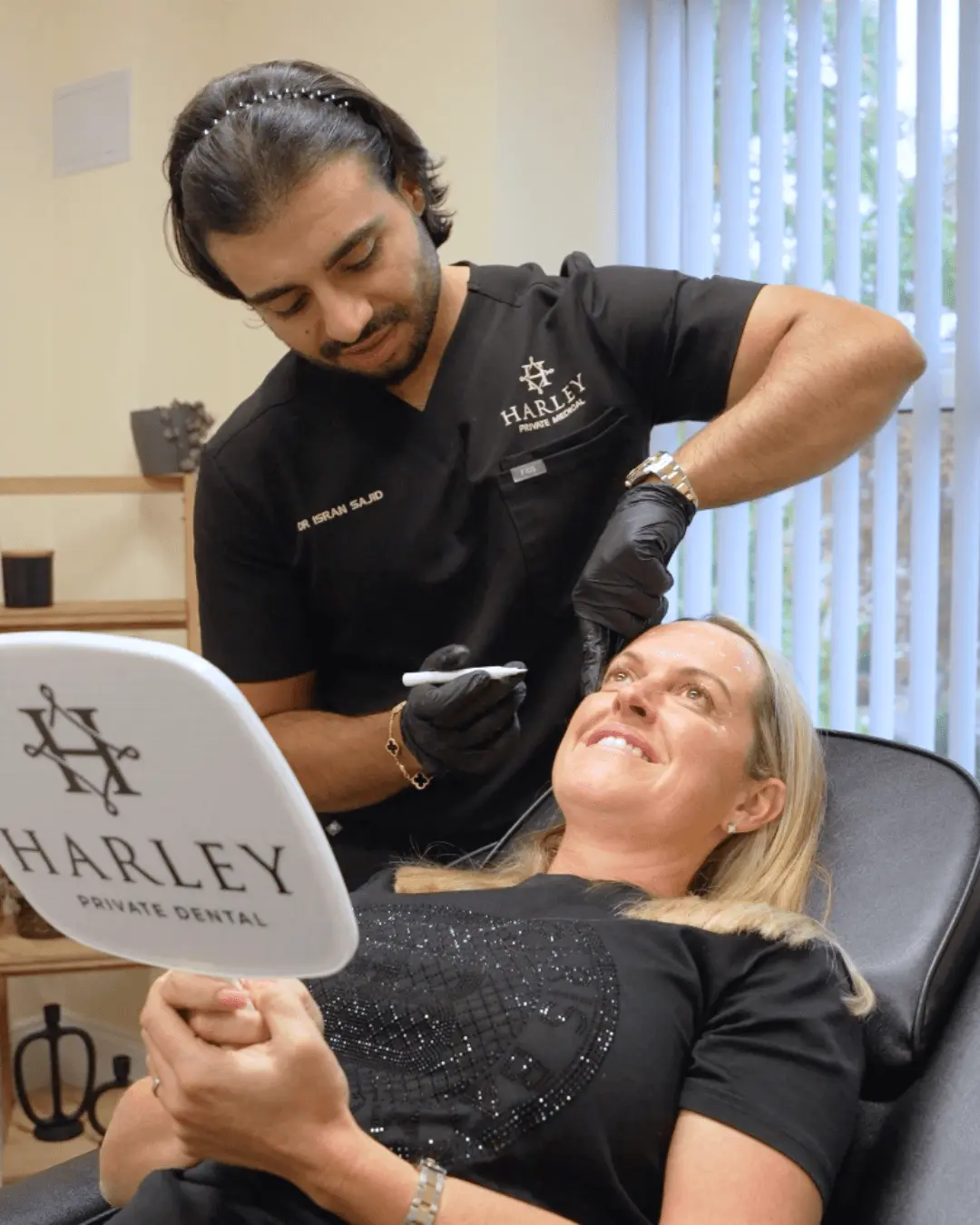

Ready to begin? It starts with a conversation.
Every treatment plan starts with careful assessment and open discussion. A consultation helps ensure decisions are informed, appropriate, and tailored to you.
Frequently asked questions
These frequently asked questions provide general information about PRP hair treatment and what you may expect. Your suitability, anticipated results and recommended treatment course will be discussed during your consultation.
What is PRP hair treatment?
PRP hair treatment uses platelet-rich plasma prepared from a small sample of your own blood. The PRP is carefully injected into areas of the scalp affected by thinning to support active hair follicles.
How does PRP support hair growth?
Platelets contain naturally occurring growth factors involved in healing and tissue repair. PRP aims to concentrate these components around active follicles and support the scalp environment.
Who is most suitable for PRP?
PRP is generally better suited to patients with early or moderate thinning where active hair follicles remain. It may be considered for male or female pattern hair loss following an appropriate assessment.
Can PRP regrow hair on a completely bald scalp?
PRP cannot create new follicles or restore hair where follicles are no longer active. Patients with advanced hair loss may require a different approach, such as hair-transplant assessment.
How many PRP sessions will I need?
An initial course of approximately three sessions is commonly recommended. The appropriate number, interval and need for maintenance will depend on your hair loss and response.
When will I see a difference?
Hair grows slowly, so results are assessed over several months. Some patients notice reduced shedding or stronger-feeling hair before a visible improvement in density.
Are the results permanent?
PRP does not permanently cure genetic hair loss. Pattern hair loss can continue to progress, so maintenance treatment or other forms of ongoing management may be recommended.
Is PRP effective for every type of hair loss?
No. PRP is not suitable for every condition, and the clinical evidence remains variable. Sudden, patchy, scarring or medically unexplained hair loss requires proper assessment before treatment.
Does PRP hair treatment hurt?
Patients usually feel a series of brief pinching or stinging sensations across the scalp. Individual sensitivity varies, and steps may be taken to make treatment more comfortable.
Is there any downtime?
Most patients can return to normal daily activities shortly afterwards. Temporary tenderness, redness, swelling, bruising or a mild headache may occur.
Get in touch with the Harley Private team
If you’d like to book an appointment, have a question about our treatments, or need further information, our friendly team is here to help.
More details:
If you have any questions or would like to speak with our team, we’re here to help.

